Asymmetrical Lips: Causes, Identification and Makeup Tips
A practical, nonjudgmental guide to uneven lip outlines, corner height, movement, photos, makeup and safety signs.

Contents
What are asymmetrical lips?
Asymmetrical lips are lips whose two sides do not mirror each other exactly. One cupid's-bow peak may sit higher, one corner may rise more, or fullness may be distributed differently across the upper or lower lip.
Perfect facial symmetry is unusual. A small stable difference can be a normal feature rather than a flaw. The useful question is whether the pattern remains visible in neutral photos, not whether every curve is mathematically identical.
Lip asymmetry is different from having a thin upper lip, full lower lip, wide mouth or heart-shaped outline. Those describe proportion or contour; asymmetry describes a difference between the left and right sides.
Key point
Asymmetrical lips have a visible left-right difference in outline, fullness, corner height or movement. Mild asymmetry is common and can change with expression, camera angle or swelling. Compare relaxed front-facing photos before choosing a label.
How to identify them
Close the lips gently without pressing, smiling or pursing.
- Relax your mouth: Close the lips gently without pressing, smiling or pursing.
- Center the camera: Use a front-facing photo with the lens level with the mouth.
- Compare landmarks: Check cupid's-bow peaks, lip corners, center line and fullness on both sides.
- Test expression: Compare neutral, soft smile and broad smile photos; movement can exaggerate differences.
- Repeat later: Use more than one photo so lighting, temporary dryness or swelling does not decide the result.
Use a clear front-facing photo with our detector for a visual estimate. Check your lip shape.
Asymmetrical lips vs other lip shapes
Compare side-to-side balance separately from thickness, width and cupid's-bow shape.
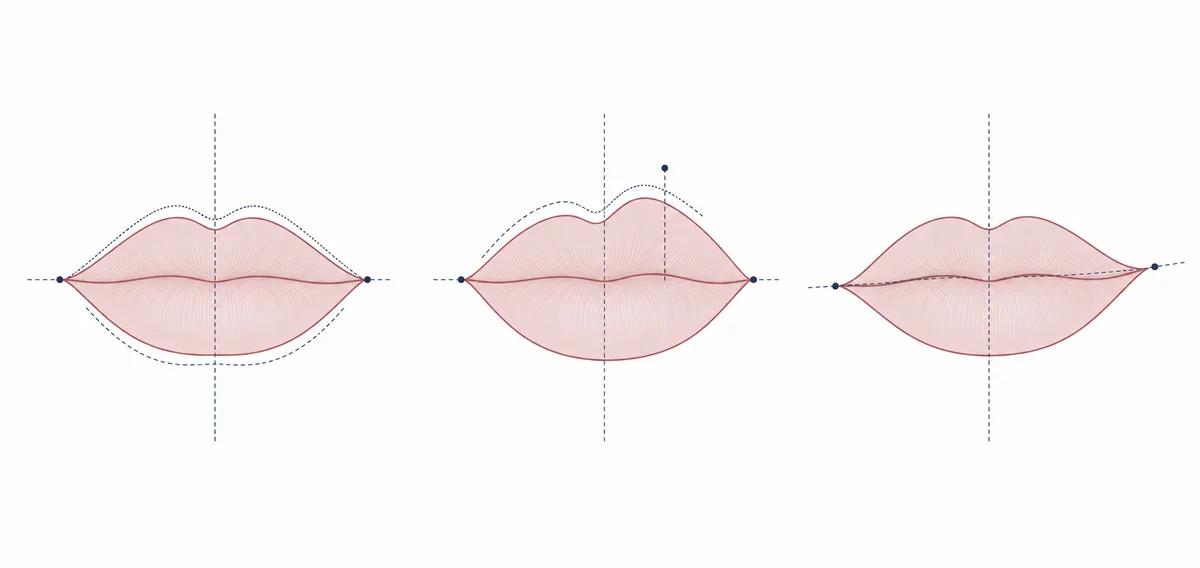
| Pattern | What changes | What stays similar | Best check |
|---|---|---|---|
| asymmetrical lips | Left and right outline or movement differs. | Side-to-side balance is the main signal. | Front photo at rest and while smiling. |
| Heart-shaped lips | Cupid's bow and upper peaks define the outline. | Both sides may still be balanced. | Compare upper-lip peaks. |
| Full lips | Upper and lower lips have more volume. | Fullness is not automatically asymmetry. | Compare volume before side differences. |
| Wide lips | The mouth spans farther horizontally. | Width concerns the whole mouth. | Check corner-to-corner span. |
| Expression asymmetry | Difference appears mainly during movement. | Resting outline may look balanced. | Compare neutral and smiling photos. |
See the full lip shape guide or compare heart-shaped lips.
Makeup tips for uneven lips
Small targeted adjustments usually look more natural than redrawing the entire mouth.
Map before lining
Mark both cupid's-bow peaks and corners with tiny dots, then connect them.
Correct selectively
Overline only the lower side by a very small amount instead of enlarging the whole mouth.
Use soft edges
Blend liner inward so the correction does not become a hard second border.
Balance light
Place a little brighter color or gloss on the visually smaller area.
Check while speaking
Look at neutral and smiling expressions before finalizing the shape.
Common mistake
Do not chase perfect symmetry with a thick, rigid outline; lips move and natural differences remain visible.
Common causes and when to seek help
Natural anatomy, facial muscle habits, dental or jaw alignment, old injury, swelling and cosmetic procedures can all influence the way lips look. Photos also create false asymmetry when the head is rotated, the lens is close, or light falls from one side.
A long-standing stable difference without pain or weakness is usually approached as a cosmetic or anatomical feature. A clinician or dentist can assess persistent concerns, especially when bite, jaw movement, pain or a recent procedure is involved.
Sudden new facial drooping, arm weakness, speech difficulty, severe headache or loss of coordination needs urgent emergency assessment. Do not use an online lip-shape guide to rule out stroke or another neurological problem.
Sudden new facial drooping, arm weakness, speech difficulty, severe headache or loss of coordination needs urgent emergency assessment. Do not use an online lip-shape guide to rule out stroke or another neurological problem. Use emergency services for sudden neurological signs..
- Relax your mouth
- Center the camera
- Compare landmarks
- Test expression
- Repeat later
Photo checklist
A repeatable photo setup prevents camera distortion from becoming a lip-shape label.
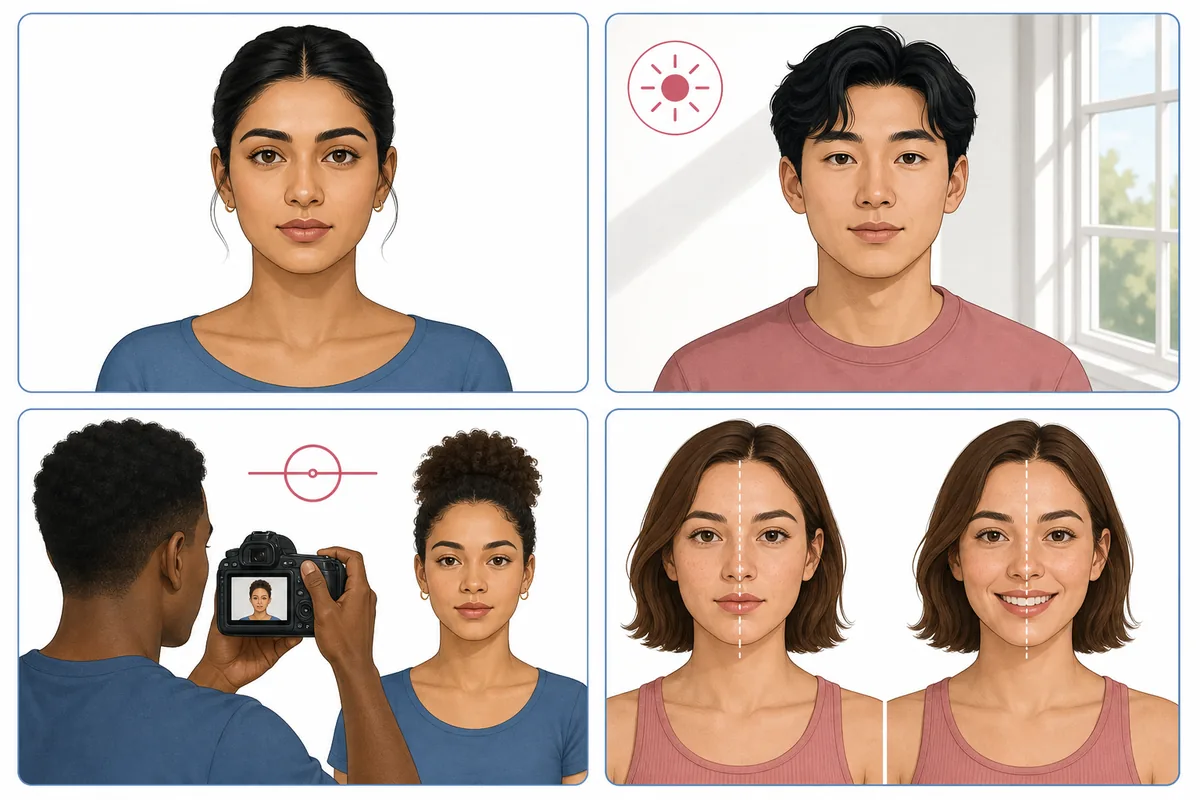
- Even daylight: Face a window or use soft light from both sides.
- Level lens: Keep the camera parallel to the face and avoid a close wide-angle lens.
- No heavy liner: Remove strong overlining before assessing natural landmarks.
- Neutral posture: Keep the head upright and jaw relaxed.
- Multiple expressions: Compare neutral and smiling photos rather than one frozen frame.
asymmetrical lips FAQ
Sources and safety references
Related lip shape resources
Updated: 2026-07-16
Try the Lip Shape Detector