Thin Lips: How to Identify, Compare, and Style Them
A practical guide to recognizing thin lips, separating height from width and fullness, and choosing makeup or consultation notes that respect the natural lip shape.

In this guide
What are thin lips?
Thin lips are lips where the visible upper and lower lip height is relatively low compared with the rest of the mouth and face. The defining signal is not whether the mouth is narrow from side to side. It is whether the pink lip area looks slim, flat, or low in volume when the face is relaxed.
This is why thin lips and small lips are not always the same thing. Small lips often describe the total mouth size. Thin lips describe the vertical fullness of the lips themselves. Someone may have a wide mouth with thin lips, while another person may have a compact mouth with fuller lip height.
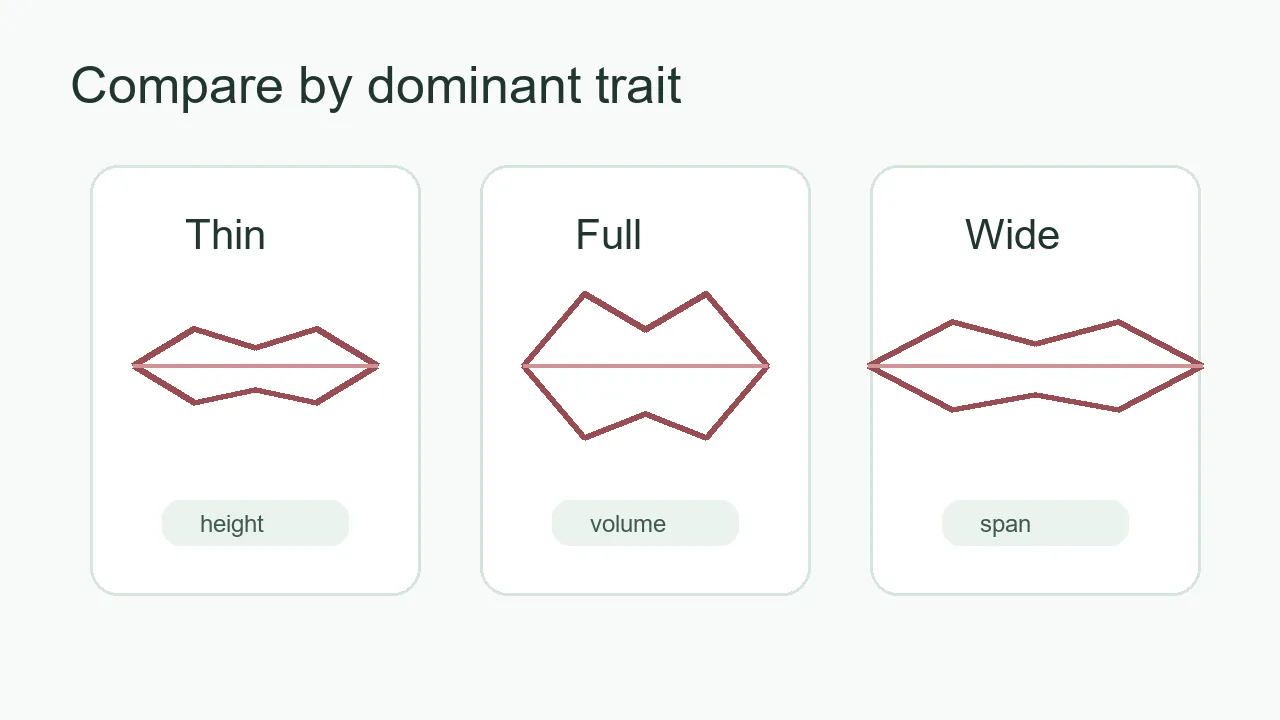
Thin lips can also be mixed with other shapes. A clear cupid's bow can create thin heart shaped lips. A broad corner-to-corner span can create thin wide lips. The most useful description names the dominant trait first and adds the secondary trait only when it makes the shape easier to understand.
Shape signal
If low lip height is the first thing you notice before width, bow shape, or projection, thin lips are probably the primary lip shape signal.
How to identify thin lips
Use a relaxed, front-facing photo before lipstick, gloss, smile, or camera angle changes the outline. These checks help separate naturally thin lips from lighting, expression, or makeup effects.
- Check vertical lip height: Look at the visible height of the upper and lower lips together. Thin lips usually have less vertical pink area than round or full lips, even when the mouth is not narrow.
- Compare volume before width: If the lips stretch across the face but still look low in height, width is secondary and thin lips may still be the better label.
- Separate a thin upper lip from both lips: Many people have a thinner upper lip and a fuller lower lip. In that case, describe the upper lip specifically instead of calling the whole mouth thin.
- Check the cupid's bow: A defined bow does not rule out thin lips. It may simply mean the thin shape has a heart-like upper contour.
- Retest without pressing the lips: Pressed lips, strong smiles, or tense expressions flatten the lip height. Use a neutral expression before deciding.
For a second opinion, upload a clear photo to the free Lip Shape Detector.
Thin lips vs similar lip shapes
Most lips combine more than one trait. Use the comparison to decide whether thinness is the main pattern or whether another label explains the photo better.
| Lip shape | Typical look | Main difference | Best check |
|---|---|---|---|
| Thin lips | Lower visible lip height and lighter volume. | Vertical fullness matters more than mouth width. | Check lip height in a relaxed photo. |
| Small lips | Compact mouth size overall. | Small describes total scale, not only thickness. | Compare both width and height. |
| Full lips | More plushness and projection. | Full lips are defined by volume. | Judge upper and lower lip body. |
| Wide lips | Corners extend farther across the face. | Wide lips are about horizontal span. | Check corner-to-corner width. |
| Heart shaped lips | Defined cupid's bow and upper peaks. | The upper outline is the dominant signal. | Compare bow definition. |
For the broader classification view, compare this page with the types of lips guide and the corner-to-corner wide lips guide.
Makeup tips for thin lips
Makeup for thin lips does not have to force a larger shape. The practical goal is usually to keep edges soft, add dimension where you want it, and avoid techniques that make the lip area look flatter than it is.
Use liner close to your natural lip color
A close-match liner can clean the border and add soft structure. If you overline, keep it subtle and focus near the cupid's bow and center lower lip rather than extending far beyond the corners.
Place brightness in the center
A small amount of gloss, balm, or lighter color in the center reflects light and makes the lips look less flat without changing the full outline.
Be careful with very dry matte formulas
Heavy matte texture can make thin lips look smaller because it reduces light reflection and emphasizes dryness. Satin, cream, tint, or soft matte finishes often look more forgiving.
Keep the corners controlled
Dark liner or heavy product at the corners can visually shrink the mouth. Blend inward so the center stays alive and the edges do not look harsh.
Balance the full face
Thin lips can look elegant with defined eyes, fresh skin, or a soft blush-lip color match. The best look is often about overall balance, not only lip enlargement.
Common mistake
The most common mistake is overlining the entire mouth with a much darker pencil. In close photos it can look obvious and can make the natural border harder to read.
Aging and filler notes for thin lips
Some people naturally have thin lips from childhood, while others notice that lips look thinner with age. Aging-related changes can include lower visible volume, softer borders, drier texture, and a less crisp cupid's bow. Genetics, sun exposure, smoking, hydration, dental support, and normal collagen and elastin changes can all influence how the lips appear over time.
If you are considering cosmetic filler, thin lips should be treated as an anatomy and style conversation, not a one-size treatment plan. A conservative consultation usually separates goals such as hydration, border definition, center volume, projection, and symmetry. More product is not automatically better, especially when the natural lip height is limited.
This guide is educational and cannot tell you whether filler is appropriate. Bring neutral photos, explain whether you want subtle definition or visible volume, and ask a licensed professional about product choice, risks, swelling, aftercare, and realistic limits.
Before any cosmetic injection, review qualified medical guidance and discuss risks, side effects, and aftercare with a licensed professional. The FDA publishes patient-facing information about dermal fillers here: FDA dermal filler safety information.
- Bring a relaxed front-facing photo without heavy liner.
- Ask whether the plan preserves your natural lip border and movement.
- Discuss whether your goal is hydration, definition, symmetry, or volume.
- Avoid at-home filler devices or non-prescription products.
- Treat AI lip shape results as educational context, not diagnosis or treatment advice.
Best photo for checking thin lips
Thin lips are easy to misread when the mouth is tense, the image is overexposed, or strong lip liner changes the border. A cleaner photo makes height, width, bow shape, and fullness easier to compare.
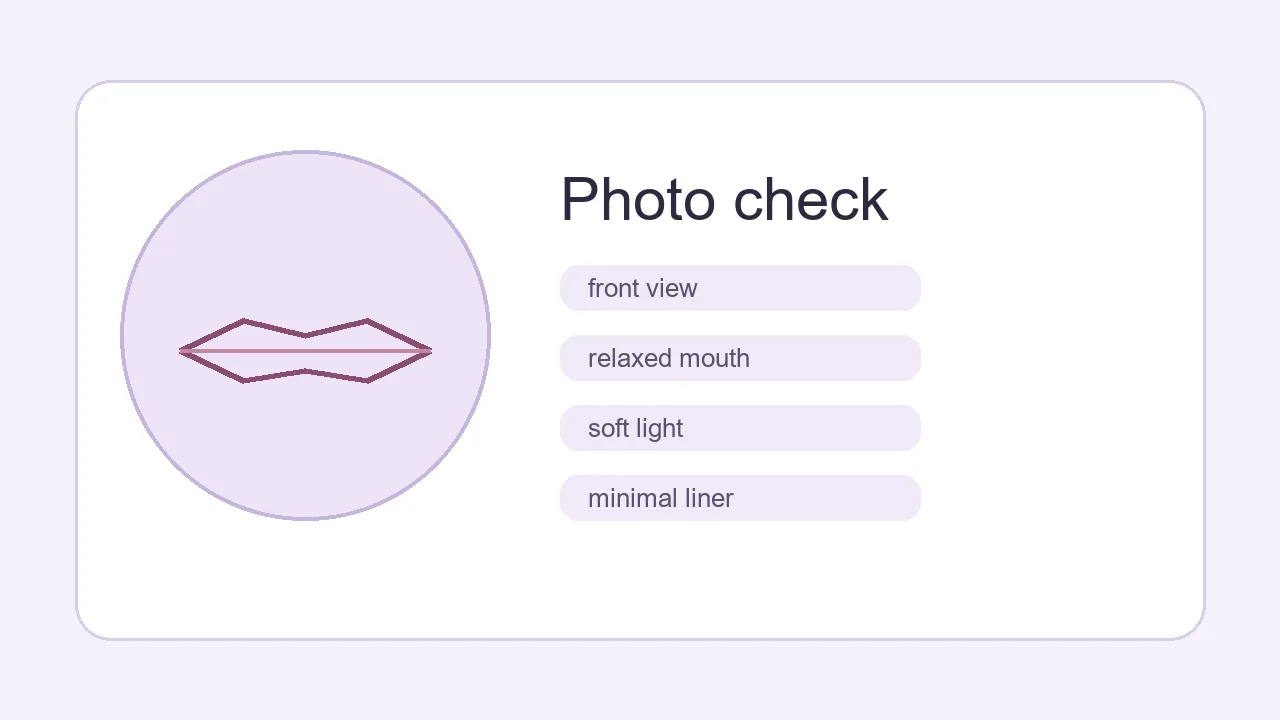
- Face the camera: Keep the lens level with the mouth so the upper and lower lip height is not distorted.
- Relax your expression: Do not smile, pout, press the lips together, or hold tension around the mouth.
- Use soft even light: Harsh shadows can hide the upper lip border, while overexposure can erase natural color.
- Remove heavy liner first: A natural lip edge helps you see whether the shape is truly thin or only styled that way.
- Compare several photos: If the lips look thin only in one expression or one camera angle, the photo may be causing the effect.
Thin lips FAQ
Related lip shape resources
Last updated: June 18, 2026
Try the Lip Shape Detector