Lip Shape Chart: Identify Your Lip Type in 3 Steps
Compare the outline, width, fullness, and cupid's bow of relaxed lips without forcing every feature into one perfect label.

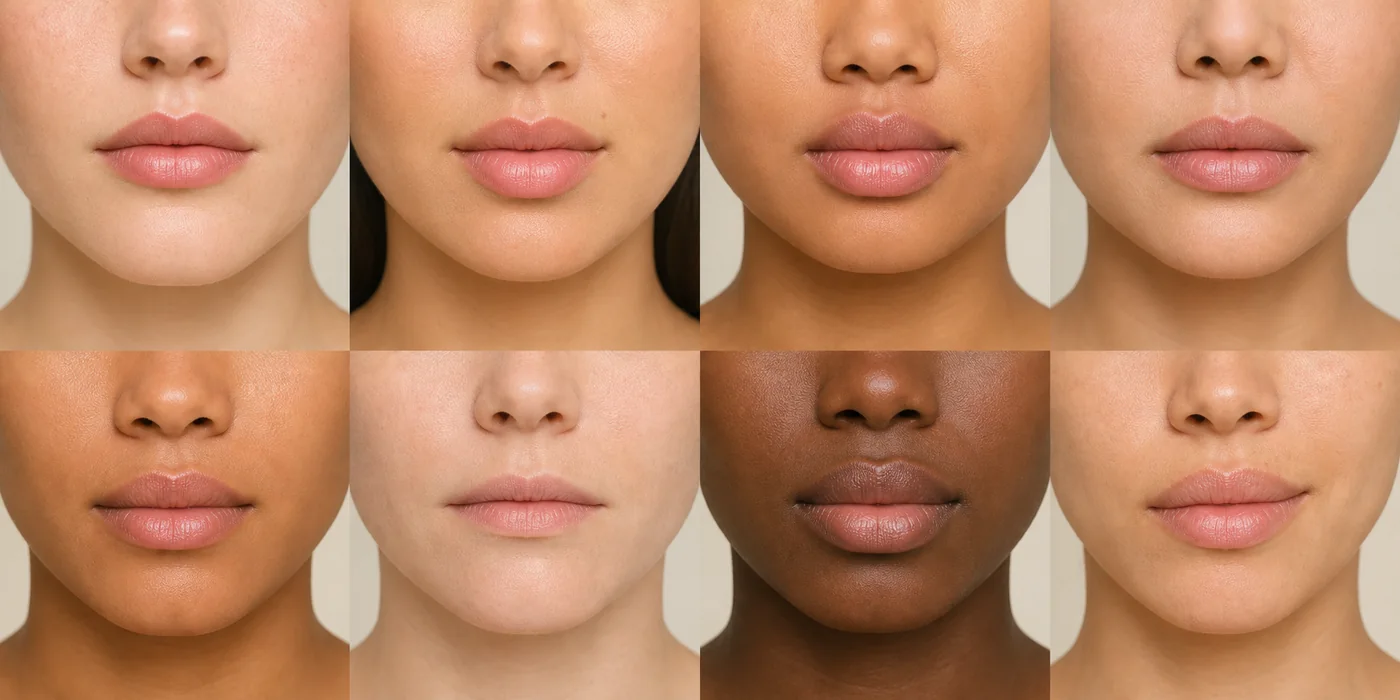
On this page
Quick Lip Shape Chart
Use the dominant cue in each row as a starting point. The final check prevents common mix-ups between labels that share one feature.
| Shape | Dominant visual cue | Final check |
|---|---|---|
| Cupid bow | A clear M-shaped peak in the upper lip | The center definition is stronger than the overall heart taper |
| Heart-shaped | Defined upper center with a fuller middle and narrower corners | The entire outline, not only the bow, suggests a heart |
| Round | Compact width with a soft, curved outline | Vertical fullness is noticeable and corners do not extend far |
| Oval | Balanced fullness with a smooth elongated curve | The outline is softer and longer than a round profile |
| Wide | Corners extend horizontally across the face | Width remains the main feature even if the lips are full or thin |
| Thin | Low vertical height in one or both lips | Judge relaxed lips, not compressed or pressed lips |
| Full | Strong volume in both upper and lower lips | Fullness is visible across most of the mouth, not only the center |
| Asymmetric | One side or one peak differs visibly from the other | The difference remains across multiple neutral photos |
If you want a broader encyclopedia of categories, examples, and makeup notes, use our complete types of lips guide.
How to Identify Your Lip Shape with Three Measurements
You do not need a ruler or a mathematically perfect face. The goal is to compare visible relationships while your lips are relaxed.
Check each cue separately before choosing a label. This is more reliable than deciding from the cupid's bow alone.
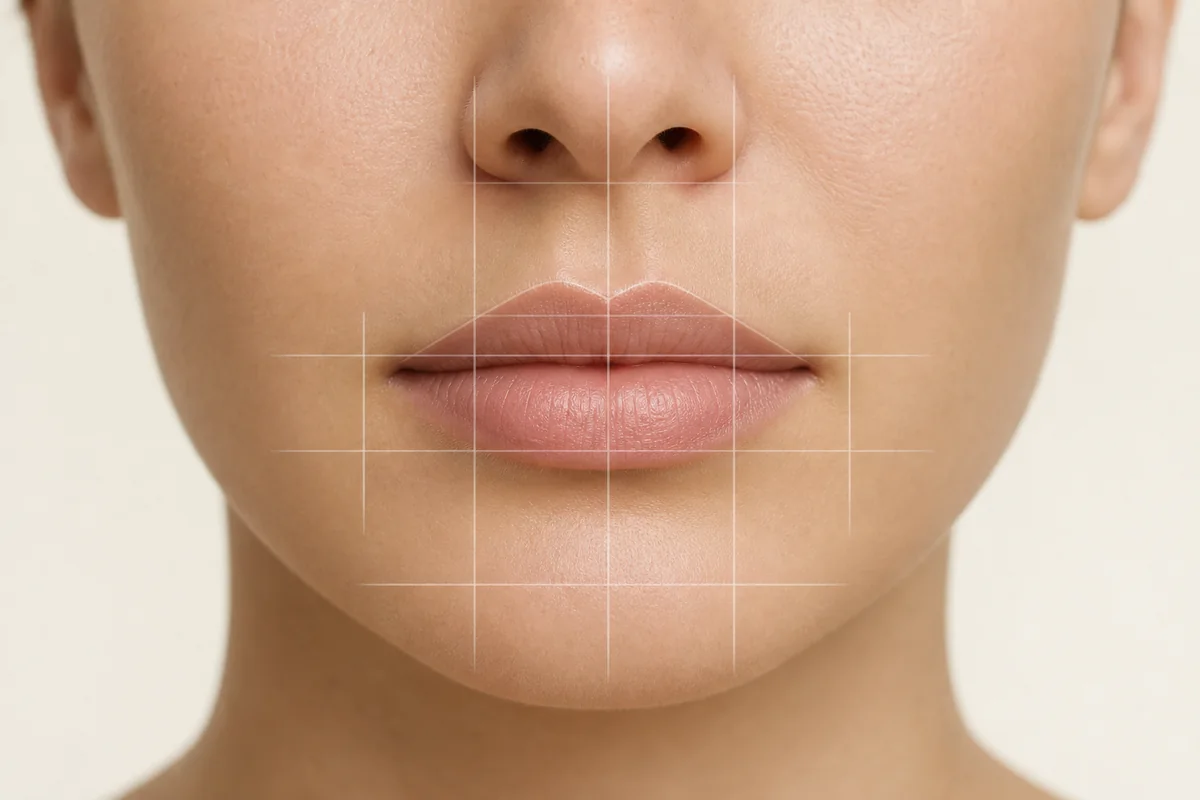
- Width: Compare the mouth width with the lower nose and the center of the face. A clearly extended horizontal line suggests wide lips; a compact line supports round or heart-shaped profiles.
- Upper-to-lower balance: Notice whether the lower lip is much fuller, both lips are similarly full, or the overall vertical height is slim. This separates full, oval, and thin profiles.
- Cupid's bow and corners: A sharp M-shaped center supports cupid bow or heart-shaped lips. A soft curve supports oval or round lips. Also note whether the corners remain level, lift, or turn slightly down.
Use a Neutral Photo Before You Decide
Camera angle, expression, liner, and gloss can change the outline enough to produce a different result. Use one neutral image as the reference and other images only as secondary checks.
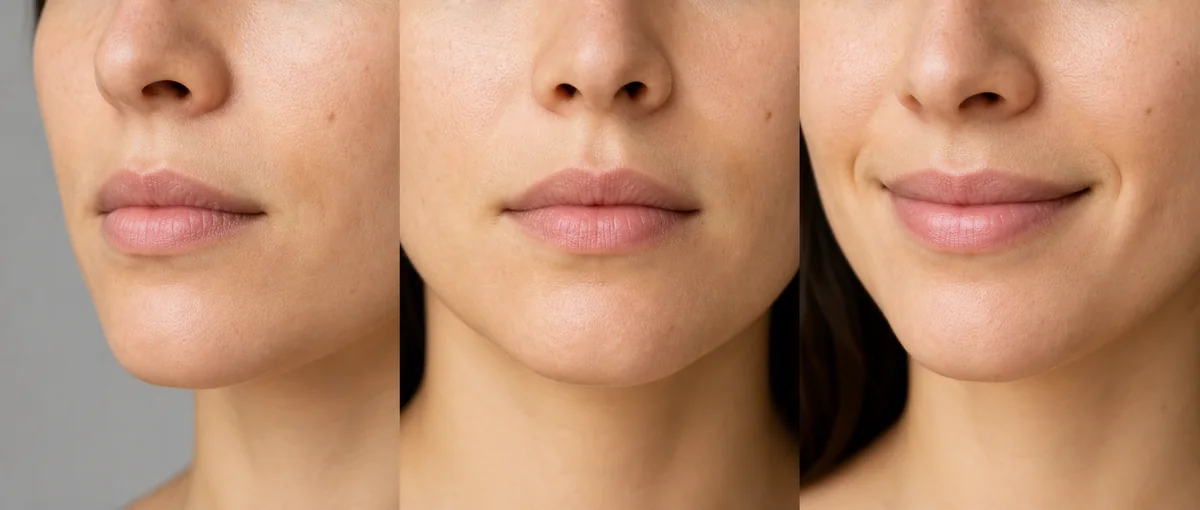
- Face the camera: Keep the lens near mouth height and avoid a high or low angle.
- Relax your mouth: Do not smile, pout, press the lips together, or pull the corners outward.
- Use even light: Front light shows the border more clearly than strong side light or a beauty filter.
- Remove outline-changing makeup: Heavy liner and overlining are useful styling tools, but they should not be used for the first classification photo.
- Check more than one photo: If the result changes, prioritize the clearest straight-on image and record the second feature as a modifier.
What If Two Lip Shapes Match?
Lip labels describe visible patterns, not fixed biological categories. A person can have a defined cupid's bow, wide corners, and full vertical volume at the same time. In that case, choose one primary label for the dominant outline and one modifier for proportion.
Small left-right differences are also normal. Classify the overall silhouette instead of comparing each side as if it must be identical. If swelling, injury, or a sudden change affects the shape, wait until it resolves or seek appropriate professional advice rather than using a beauty chart.
Use a two-part result
Examples such as “wide, full lips” or “oval lips with a defined cupid's bow” are often more accurate and useful than forcing one label.
Choose the Guide That Matches Your Main Cue
After the chart gives you a likely profile, compare it with a dedicated guide or use the photo detector for a second opinion.
Lip Shape Chart FAQ
Last updated: July 10, 2026
Analyze My Lip Shape