What Face Shape Do I Have? A Clear Way to Find Your Face Shape
Use a quick visual checklist, a neutral photo, and an online comparison tool to identify the face-shape pattern that fits you best.

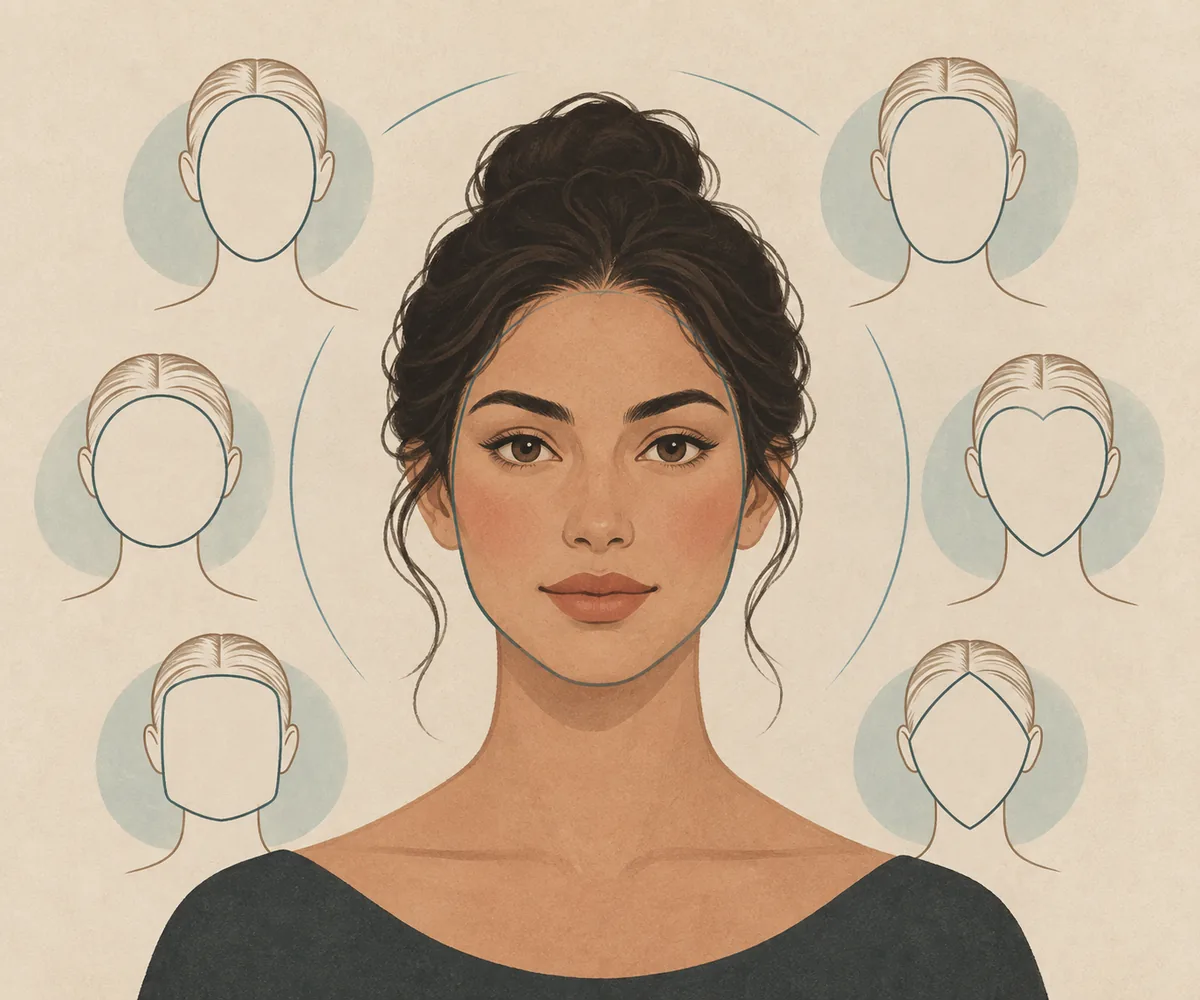
If you are asking, “What face shape do I have?”, begin with proportions rather than a beauty rule. Pull your hair away from the outline, face a mirror or camera directly, and compare the length of your face with the width of your forehead, cheekbones, and jaw. The goal is not to force yourself into one perfect category. It is to find the description that explains the overall pattern and gives you useful direction for glasses, hair, makeup, or simple curiosity.
What face shape do I have? The quick answer
Look at three things together: which area is widest, whether your face is noticeably longer than it is wide, and whether your jawline is rounded, tapered, or angular. If you want a photo-based comparison after making your own observation, try the face shape detector and use the result as a helpful second opinion, not a fixed identity label.
A simple starting rule
Longer with balanced forehead and jaw usually points toward oval. Similar length and width with soft curves often looks round. A strong lower edge suggests square. A wider forehead with a narrow chin suggests heart, while the widest cheekbones with a narrower forehead and jaw suggest diamond.
Clues for the six common face shapes
No face-shape category has a universal measurement cutoff. Use these descriptions as visual patterns and allow for combinations.
Oval face
The face is usually longer than it is wide. The forehead and jaw look fairly balanced, and the jawline curves gently rather than ending in a strong corner.
Round face
Length and width appear relatively close, with soft cheeks and a smooth jaw. The outline has few sharp angles, although a round face can still have a defined chin.
Square face
The forehead, cheekbones, and jaw may have similar width, while the jaw corners look more pronounced. The lower third gives the outline a structured, strong appearance.
Oblong face
The face is clearly longer than it is wide, with a fairly even width from forehead through jaw. It can look similar to oval, but the sides are often straighter.
Heart-shaped face
The upper face is wider than the lower face, and the chin narrows toward the bottom. A high or broad forehead may be noticeable, with a softer or pointed chin.
Diamond face
The cheekbones are usually the widest area, while the forehead and jaw are narrower. The chin and cheekbone angles may look more defined than the rest of the outline.
A quick way to identify your face shape
You can make a useful first estimate in a few minutes. Use the same light and viewpoint for every check, and write down what you see before looking at hairstyle or makeup examples.
- Start with a neutral view — Tie your hair back, relax your expression, and look straight ahead. Avoid judging from a smiling selfie or a three-quarter angle.
- Compare the widest areas — Notice whether the forehead, cheekbones, or jawline is widest. This clue often separates heart, diamond, square, and oval patterns.
- Check length and angles — Compare face length with width and look at whether the jaw is rounded, softly tapered, or clearly angular.
- Confirm with a second view — Use a neutral photo, your own measurements, or the face shape detector as a second opinion instead of treating one label as permanent.
| Check | What to look for | Helpful question |
|---|---|---|
| Face length | Hairline to chin compared with face width | Is my face noticeably longer than wide? |
| Forehead | The widest point across the upper third | Is my forehead wider than my jaw? |
| Cheekbones | The widest point through the middle | Do my cheekbones stand out as the widest area? |
| Jaw and chin | Rounded, straight, broad, or tapered lower edge | Does my jaw look soft, square, or narrow? |
| Overall outline | The combined silhouette rather than one feature | Which category explains most of the pattern? |
How to take a better photo for face-shape checking
A photo can make the comparison easier, but camera position changes the apparent width of the face. Keep the setup simple so the tool or your own eyes are looking at the outline rather than lens distortion.
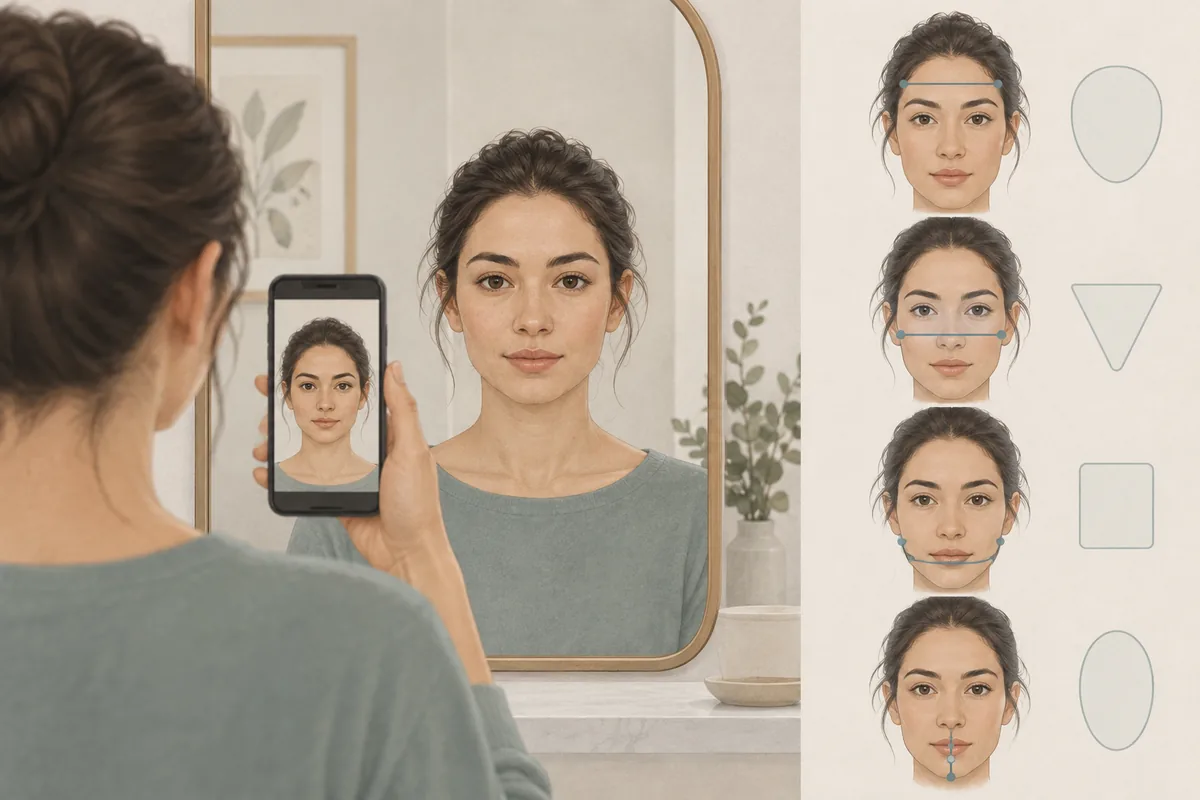
- Face the camera — Keep your nose and chin close to the centre of the frame. A three-quarter view changes the apparent width of the jaw and cheekbones.
- Use eye-level framing — Hold the camera at eye height and step back slightly. Very close wide-angle selfies can enlarge the centre of the face.
- Tie hair back — Remove bangs, loose curls, and side volume from the outline. You can release your hair later when using the result for styling ideas.
- Use even light — Soft front lighting keeps shadows from making one cheek, temple, or jaw corner appear wider than it is.
- Keep a relaxed expression — A wide smile can lift the cheeks and change the jaw tension. A calm, natural expression is easier to compare.
Manual clues vs online face-shape tools
The manual method teaches you why a result looks plausible. An online tool can make the first comparison faster, especially when your features sit between two categories.
| Method | Best for | Main limitation |
|---|---|---|
| Mirror and measurements | Learning your proportions and checking a guide | Small landmark or unit errors can change the comparison |
| Neutral photo | Seeing the complete outline from one consistent angle | Lighting, distance, expression, and camera lens still affect the image |
| AI-assisted tool | Getting a quick probable match from a clear photo | It is an estimate and cannot replace your own judgement or a universal definition |
After your first visual check, open the face shape calculator for a faster photo-based comparison, then use the face shape test.
Why you may get two face-shape answers
Mixed results are normal. Face shape is a practical styling category, and real faces do not always match a single outline.
- Softly square or oval — A longer face with a gently defined jaw may look oval in one photo and softly square in another. Compare the jaw angle and the overall length together.
- Heart or diamond — Both can have a narrower chin. The forehead is usually the stronger clue for heart, while the cheekbones are usually the stronger clue for diamond.
- Round or short oval — A small difference in face length can move the visual impression between these descriptions. Check a straight-on photo rather than relying on a close selfie.
- Changing photo conditions — Hairline visibility, head tilt, shadows, camera distance, and expression can all change the outline. Repeat the check under similar conditions before deciding.
For a more structured check, compare your notes with the face shape measurement guide.
What face shape do I have? FAQ
Further reading
- Byrdie: How to Determine Your Face Shape — A styling-focused reference for comparing face length, width, and jawline clues.
- Allure: How to Figure Out Your Face Shape — A practical visual guide that reinforces checking the full outline rather than one feature.
- Healthline: How to Determine Your Face Shape — Additional context on common face-shape categories and measurement-based comparison.
Summary: compare the pattern, not one feature
To answer “what face shape do I have?”, start with a straight-on, relaxed view. Compare length, forehead, cheekbones, jawline, and chin as one pattern. Allow for mixed shapes, repeat the check in good light, and use an online tool as a convenient second opinion. The most useful result is the description that helps you make a decision, not a label that claims to define you.