Downturned Lips: How to Identify and Enhance Them
A practical guide to resting lip corners, photo checks, similar shapes, makeup choices and changes that deserve professional attention.

Contents
What are downturned lips?
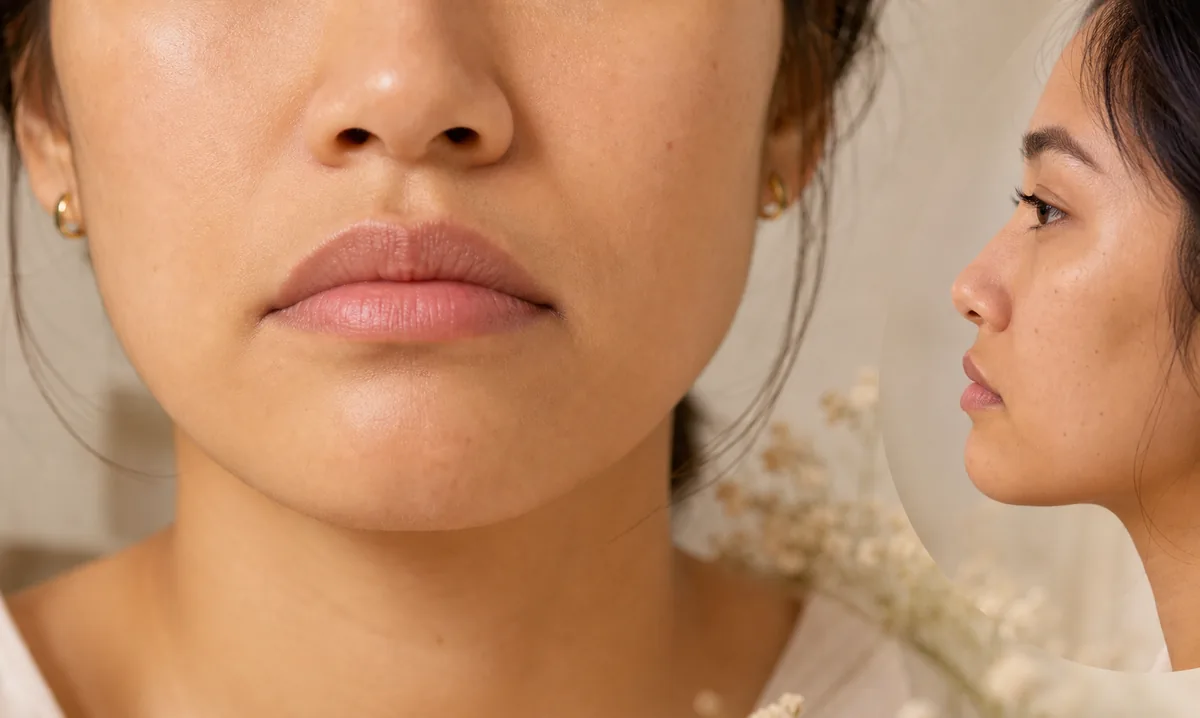
Downturned lips are a natural lip shape in which the outer corners angle gently downward when the mouth is closed and the facial muscles are relaxed. This downturned lip shape is sometimes described more broadly as a downturned mouth, but the precise feature to inspect is the direction of the corners. Imagine a horizontal line through the point where the upper and lower lips meet at the center. If both corners consistently sit a little below that line, the outline may read as downturned. The slope can be subtle, and many people have a mixed shape rather than a textbook example.
Corner direction is the defining feature. Downturned lips can be full, thin, wide, narrow, symmetrical or slightly uneven. A full lower lip does not automatically make the mouth downturned, and a pronounced cupid's bow describes a different part of the outline. This is why a shape guide should assess width, fullness, upper-lip contour and corner direction separately.
A neutral mouth can sometimes be misread as sad, stern or tired, but lip geometry does not reveal a person's mood or personality. Expression, head angle, camera height and lighting can change the impression in a single photo. The useful goal is to recognize a stable physical pattern without attaching a value judgment to it.
Natural lip corners are created by the way the lips, surrounding tissue, jaw and facial muscles meet. Some people have had the same outline since childhood; others notice the corners look more downward only while concentrating or after the face changes with age. One resting image is not enough to separate these possibilities.
Key point
Look at the direction of both outer corners while the mouth is genuinely relaxed. Thickness and cupid's-bow shape are secondary features, and a downturned outline is not a measure of emotion or beauty.
How to identify downturned lips in five checks
Use a mirror and a front-facing photo rather than judging the shape from a selfie taken above or below the face. Complete the checks without smiling, pressing the lips together or lifting the corners on purpose.
- Relax the whole lower face: Let the jaw hang comfortably, close the lips without squeezing and breathe normally. Tension can pull one or both corners down.
- Find the center reference: Locate the line where the lips meet at the middle of the mouth. Treat this as the reference rather than comparing the corners with the nose or chin.
- Compare both corners: Look for a gentle downward path from the center toward the outer edges. Both corners should show the pattern for a clearly downturned shape; a one-sided difference is better assessed as asymmetry.
- Separate slope from volume: Ignore whether the upper or lower lip is fuller for a moment. A heavy lower lip concerns volume balance, while downturned lips concern corner direction.
- Repeat with another photo: Check a second day in even daylight. A close lens, tilted head, active expression, dryness or temporary swelling can create a false slope.
For a consistent visual estimate, use a clear neutral photo with our lip shape detector.
Downturned lips vs similar lip shapes
The three examples progress from downward corners to a neutral corner line and then upward corners. Real lips often combine more than one feature, so use the table to decide which signal is strongest instead of forcing a single label.
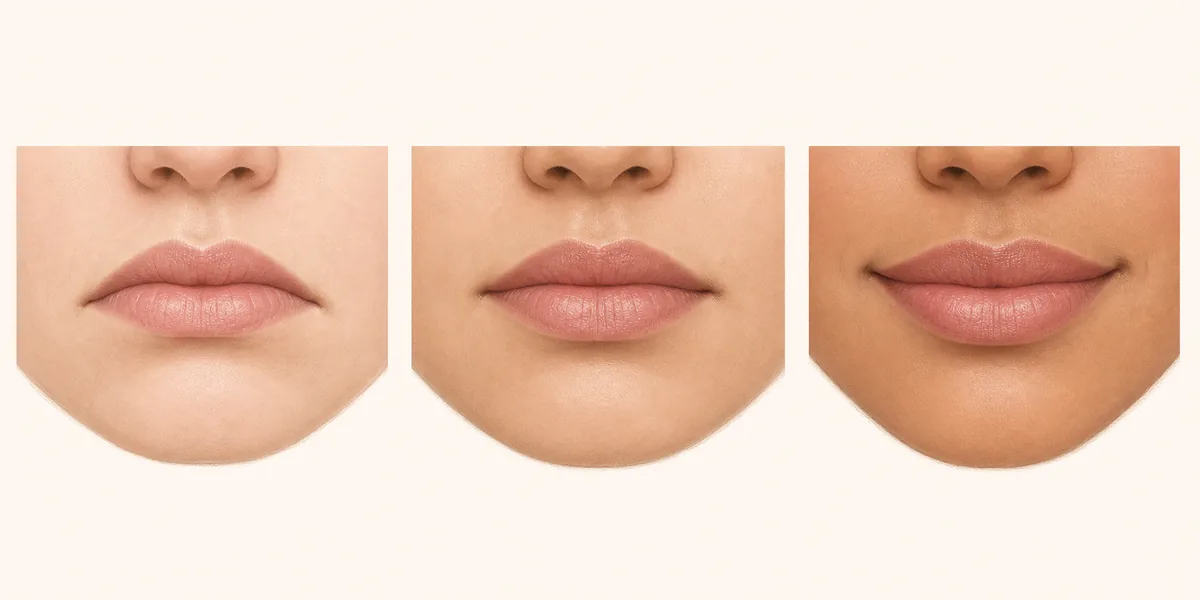
| Pattern | Main signal | What makes it different | Best check |
|---|---|---|---|
| Downturned lips | Both outer corners rest below the center line. | Corner direction is the defining feature. | Front photo with a relaxed mouth. |
| Upturned lips | Both corners rise gently from the center. | The resting slope travels upward rather than downward. | Ignore a deliberate smile and inspect the neutral outline. |
| Heavy lower lip | The lower lip carries more visible volume. | Volume balance can occur with any corner direction. | Compare upper and lower fullness separately from the corners. |
| Asymmetrical lips | One side has a different height, outline or movement. | The left-right difference matters more than the overall slope. | Compare each corner in neutral and smiling photos. |
| Expression-only downturn | Corners drop mainly during concentration, speech or tension. | The neutral resting outline may be level. | Compare several frames rather than one selfie. |
Compare the full set in our types of lips guide and use the asymmetrical lips guide when only one side differs.
Makeup tips for downturned lips
Makeup can emphasize the natural pout or create a slightly lifted visual line. Neither result is more correct. Start with small changes, inspect the shape from normal conversation distance and keep the real corner visible enough that the outline does not look disconnected.
Prepare a clean, flexible edge
Use balm first and blot away excess before liner. A smooth border makes small corner adjustments easier and prevents a dry patch from creating a jagged false outline.
Stop the lower liner just before the corner
Trace the lower lip from the center outward, but soften or stop the line a fraction before the natural endpoint. This avoids reinforcing the final downward section. Keep the adjustment tiny so it still looks believable when you speak.
Lift the upper corner with a short stroke
Connect the upper-lip line to the softened corner with a subtle outward-and-upward stroke. Do not draw a sharp wing. Blend inward with the lipstick so the new edge reads as one contour rather than a separate mark.
Keep light near the center
A slightly lighter finish or a controlled touch of gloss at the center draws attention away from the corners. Leave the outermost edges softer or more matte for a balanced effect.
Check neutral and smiling expressions
A correction that looks balanced at rest may break when the mouth moves. Speak, smile softly and view the result in ordinary light before adding more liner or concealer.
Common mistake
Erasing both corners with a large patch of concealer and drawing steep new lines can make the mouth look smaller or disconnected. A short, soft adjustment usually reads more naturally than a complete redraw.
Natural downturned lips or a new change?
A long-standing, even downturn visible across many photos is usually a stable feature of the person's resting anatomy. Compare current images with older neutral photos rather than relying on memory. If the slope appears only when tired, concentrating or clenching the jaw, facial tension may be influencing the moment more than the underlying lip outline.
A gradual change can accompany ordinary aging because skin support, facial volume, teeth, bite and muscle balance can change over time. Persistent dental discomfort, jaw problems or a concern after a cosmetic procedure is better discussed with the appropriate qualified clinician. An online shape guide cannot determine the cause or recommend an injection, filler or surgery.
A sudden new one-sided droop is different from naturally downturned lips. It should not be treated as a beauty-category question, particularly if it appears with arm weakness, speech difficulty, confusion, dizziness, vision change or a severe headache.
Photo checklist for a reliable lip-shape check
A repeatable photo setup reduces perspective and expression errors. Take the reference image before applying strong liner, and keep the camera far enough away that a wide-angle lens does not enlarge the middle of the face.
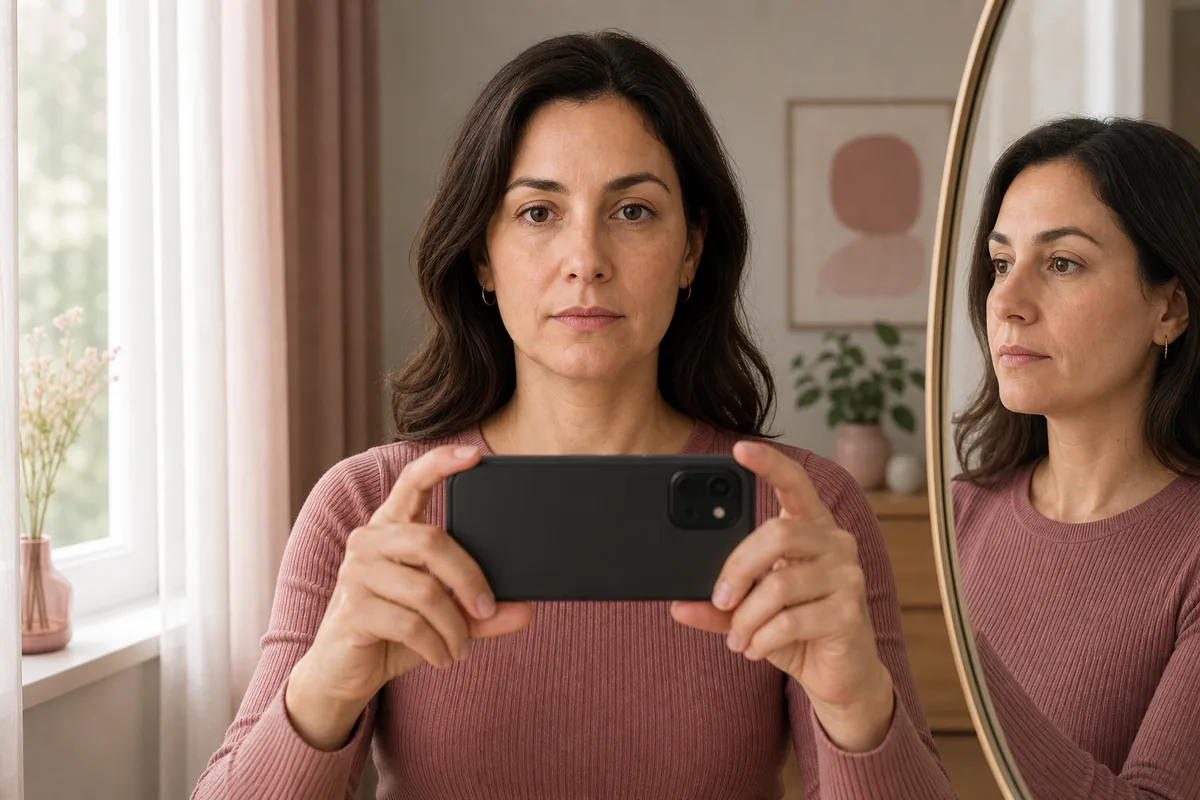
- Even front light: Face a window or use soft light from both sides so one corner is not hidden by shadow.
- Camera at mouth level: Keep the lens parallel to the face. Looking down at a phone can make the corners appear lower.
- Neutral head position: Hold the head upright without tilting or turning. Check that both ears are similarly visible when possible.
- Relaxed closed lips: Do not smile, pout, press, bite or stretch the lips during the neutral reference photo.
- More than one frame: Compare neutral, soft-smile and speaking frames. A stable downturn remains visible at rest; movement-dependent changes need a different interpretation.
Downturned lips FAQ
References
Related lip shape resources
Updated: July 25, 2026
Check your lip shape