Heavy Lower Lips: How to Identify and Style Them
A practical guide to lower-lip fullness, bottom-heavy proportions, neutral photo checks, makeup balance, and mixed lip-shape features.

Contents
What are heavy lower lips?
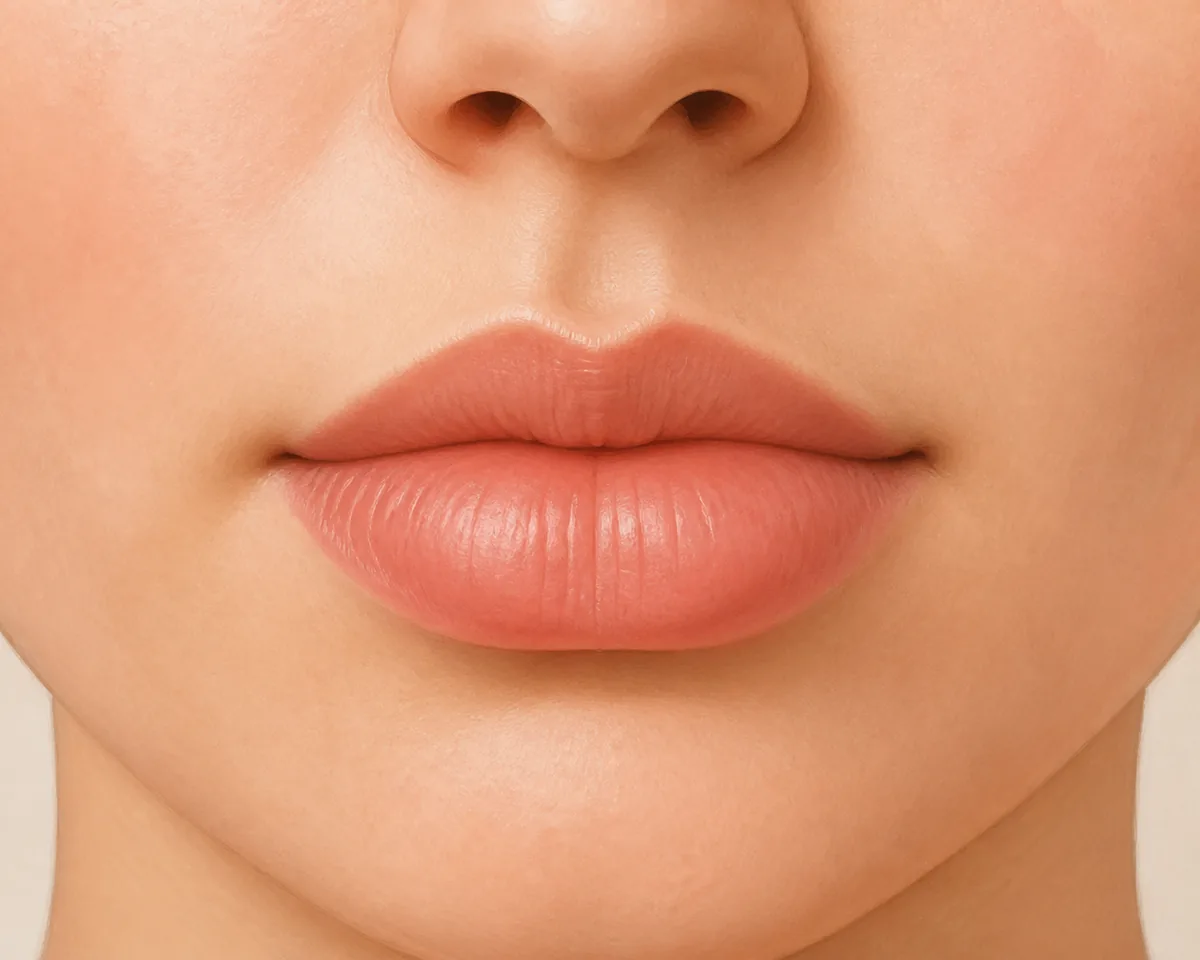
Heavy lower lips describe a proportion: the lower lip carries more visible height, projection or soft volume than the upper lip. People also use the phrases bottom-heavy lips and fuller lower lip for the same general pattern. It is a descriptive shape label, not a ranking of attractiveness and not a statement about personality.
The strongest clue is the upper-to-lower balance, not the total size of the mouth. A person can have heavy lower lips with a narrow mouth, a wide mouth, a defined cupid's bow or softly rounded corners. Full lips usually means both lips have substantial volume; heavy lower lips means the lower lip is the more prominent half.
Lip labels can overlap. A lower-heavy mouth may also look heart shaped when the upper peaks are clear, round when the outline is soft, or downturned when both corners slope down. Record the dominant volume relationship first, then add a second feature if it helps describe the whole outline.
Proportion signal
Look at the relationship between the upper and lower lip before judging width, corners or makeup. Lower-lip fullness can exist alongside almost any overall lip shape.
How to identify heavy lower lips in five checks
Use a relaxed front-facing mirror view or photo. The goal is not to measure a perfect ratio; it is to compare the two lips under conditions that do not artificially enlarge one part.
- Relax the mouth: Close the lips gently without pressing, pouting or smiling. Tension can flatten the lower lip or pull the corners outward.
- Compare vertical height: Look at the visible red lip area above and below the center seam. A noticeably deeper lower section supports a lower-heavy description.
- Check projection and shadow: Soft front light can reveal whether the lower lip projects naturally. Avoid treating a strong shadow or gloss highlight as extra volume.
- Separate width from fullness: A wide mouth can look large without being lower-heavy. Compare upper and lower volume separately from the corner-to-corner span.
- Repeat in another neutral frame: Take a second photo at mouth level. If the result changes only with expression or camera angle, describe the feature cautiously as mixed or context-dependent.
For a second visual estimate, upload a clear neutral photo to our Lip Shape Detector.
Heavy lower lips vs similar lip shapes
The same mouth can fit several labels, but each label answers a different question. The comparison below keeps volume balance separate from outline, width, corners and symmetry.
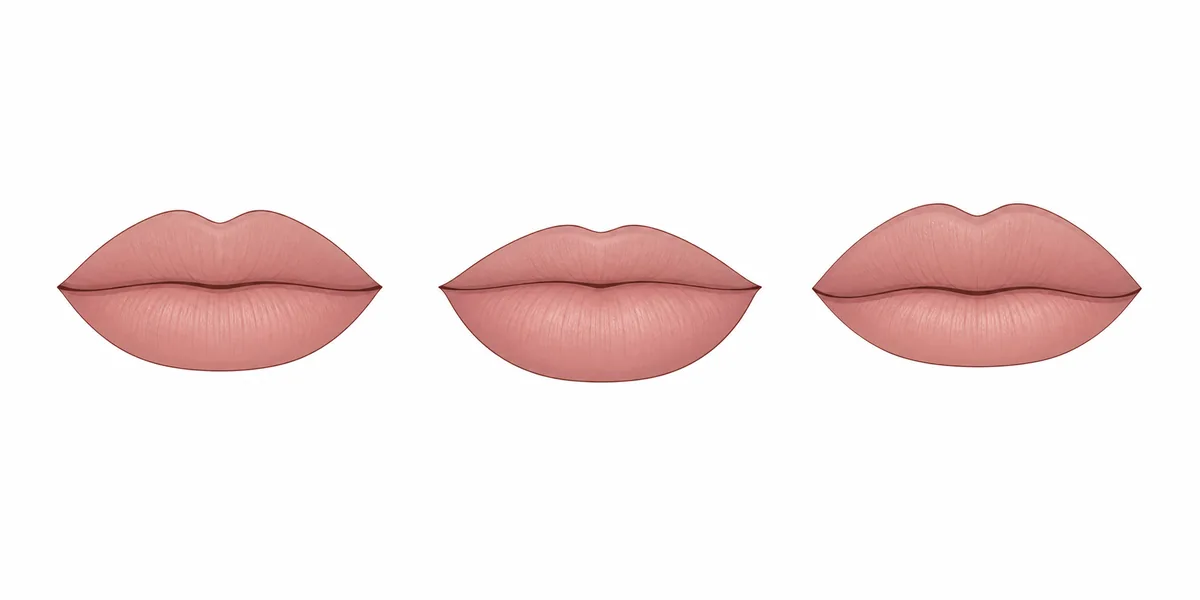
| Pattern | Main signal | What makes it different | Best check |
|---|---|---|---|
| Heavy lower lips | The lower lip carries more visible volume. | Upper-to-lower balance is the defining cue. | Neutral front photo with soft light. |
| Full lips | Both upper and lower lips look substantially full. | Total volume is stronger than the ratio. | Compare both lips before judging the outline. |
| Heart-shaped lips | The upper lip has clear peaks and a central dip. | The upper contour may matter more than lower volume. | Check the cupid's bow and the whole silhouette. |
| Thin lips | One or both lips have low vertical height. | Thinness describes height, while lower-heavy describes the relationship. | Compare height without pressing the lips. |
| Asymmetrical lips | The two sides differ in height, outline or movement. | Left-right difference is the main cue, not upper-lower balance. | Compare both corners in several neutral frames. |
| Downturned lips | Both outer corners slope below the center line. | Corner direction is separate from lower-lip fullness. | Inspect corners and volume as two separate signals. |
For a broad category overview, compare this guide with the full lips guide and the types of lips guide.
Mixed features and what the label cannot tell you
Heavy lower lips can be a useful short description, but they are not a complete identity. You might have a fuller lower lip with a sharp cupid's bow, a soft oval outline, wide corners or mild asymmetry. When choosing makeup, write down the two features that actually affect the result instead of forcing one category to explain everything.
Photos can make the lower lip appear larger when the camera is below the face, the chin is raised, or a reflective gloss is concentrated on the center. A compressed selfie can also change the visible upper-to-lower relationship. Compare similar lighting, distance and expression before deciding that the anatomy has changed.
This guide is for visual description and makeup planning. It cannot diagnose a condition, predict personality or determine whether a cosmetic procedure is appropriate. If a new change concerns you, discuss it with a qualified professional rather than treating an online lip label as an explanation.
Makeup tips for balancing a fuller lower lip
The aim is optional visual balance, not correction. Follow the natural border first, then make small changes that keep the mouth believable while speaking and smiling.
Keep the lower outline clean
Trace the natural lower edge and avoid adding a second heavy line beneath it. A dark extended lower line can make the lower lip look even heavier.
Give the upper center gentle definition
A short, soft cupid's-bow line or a little color at the upper center can add visual structure without overlining the whole upper lip.
Use shine selectively
Place gloss near the center of the upper lip or use a balanced satin finish. Strong shine only on the lower lip can exaggerate its projection.
Soften the outer corners
Keep the corners slightly less reflective than the center when you want a more even visual weight. Blend rather than drawing a sharp new shape.
Check the moving mouth
Speak, smile softly and view the result in ordinary light. A line that looks balanced at rest may look too large when the lips move.
Common mistake
Overlining the entire upper lip to match the lower lip can erase the natural cupid's bow and make the mouth look drawn on. Small center adjustments usually look more natural than a complete redraw.
Photo checklist for a reliable lip-shape check
A consistent photo is more useful than a close selfie. Keep the camera at mouth level and use the same conditions when comparing the upper and lower lips.
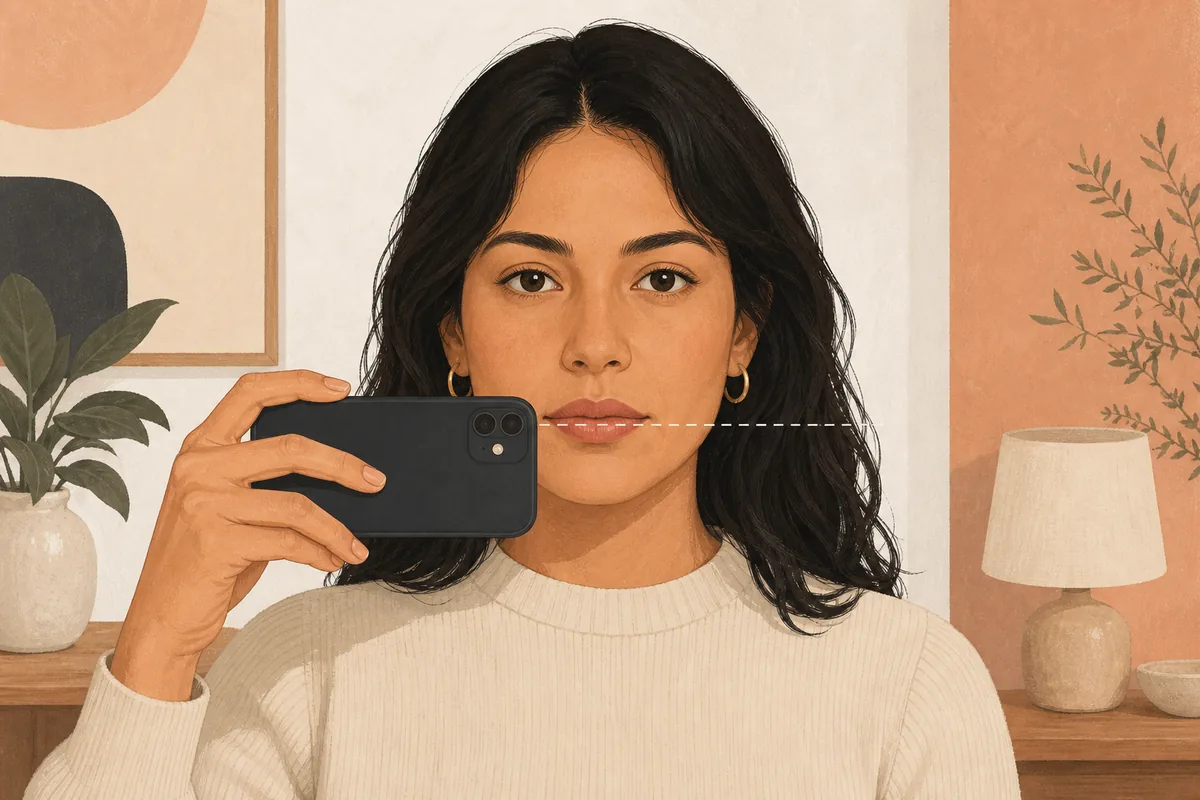
- Mouth-level camera: Keep the lens parallel to the face rather than above or below the lips.
- Even front light: Use soft light from the front so a shadow does not make one lip appear deeper.
- Relaxed closed lips: Do not smile, bite, purse or press the lips together for the reference frame.
- Light or no outline-changing makeup: Heavy liner, overlining and strong gloss should be removed before the first classification photo.
- Compare two or three frames: A stable lower-heavy relationship appears in similar neutral frames; a change limited to expression needs a cautious description.
Heavy lower lips FAQ
References
Related lip shape resources
Updated: August 2, 2026
Check your lip shape